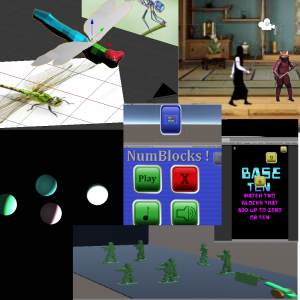
Endless Elevator Mechanics

Howdy. Xander here…

This is a quick demo of the basic play mechanics from our new game in development Endless Elevator.  We got the basic movement working a while ago (see our Smooth Moves post) and now that The Dog Run is in BetaTesting we can spend some more time working on this game.

(If you want to help with Beta Testing and be an early adopter of The Dog Run you can sign up here: https://play.google.com/apps/testing/com.ZuluOneZero.TheDogRun)

This clip below for Endless Elevator shows:

The Good Guy Cop Character movement (oh yeah he goes left and right)

Firing his awesomely powerful dumb dumb gun

Using (the eponymous) Elevator (see if you can spot the camera tracking bug!)

Traversing (the namesake) Escalators

Finally entering a doorway with a Power Cube (I’m not sure what it will look like in the final game yet). When he goes into a doorway with the special block the game flips and he goes into a Super Spy Store (not shown) where new fun weapons and power-ups are available!  Cool.

ZuluOneZero takes “The Dog Run” for a walk on the Google Play Store


An Endless Runner for Android goes into Beta Testing.

Take your dog for a run – it’s good for your heart – and supports animal rescue!

This is a free game – with no pop ups. In the Alpha release there is the option to watch ads.
All profits from the ads go to support animal welfare and animal hospitals.

The game is about taking your fun lovin’ pooch out running – but watch out! There is a bunch of obstacles in your path – it’s a good thing you are a natural jumper and can run all day in all sorts of weather.

Preview the game here (You will need the Opt in URL):
https://play.google.com/apps/testing/com.ZuluOneZero.TheDogRun

Feedback can be posted on the website in the comments or directly by email.

ZuluOneZero Game Design

Games


zuluonezero.z10@gmail.com

The Dog Run Soundtrack

Hi Gene here !  We are getting really close to pushing our Dog Run game into Beta Testing on the Play Store.  The original soundtrack was a little too moody for the game so we started working on a new one.

If you want to be a Beta Tester Subscribe to this mail list on the right.

We started with a basic rhythm and then built it up into eight different loops. Next the crazy funky keyboard riff was added in a really simple twelve bar step pattern.  It took a while to get it right but the wailing howling synth was laid over the top in about sixteen takes. Worth it though. Last we added a few undulating effects for interest and mixed it down inside the box.  I’ve been listening to it loop about in my head for a few hours at a time and I think it’s making me loopy. Damn fine effort even if I say so myself.

Check it out on Soundcloud: (Set it too loop!)

Gene out.

The Kit

This is the hardware and software that I’m currently using to make games.

My main machine is a Venom BlackBox laptop. It’s got an i5 Intel Core and 8 GB of RAM. The OS c:\ drive is flash and the d:\ storage drive is SAS. so the operating system stays fast but it also has plenty of local storage. This was my main expense and after working for years on a 3nd hand Toshiba it’s an absolute dream. They are made locally in Melbourne at a place called MLN Computers who specialize in Gaming Hardware and it’s just beautifully finished and super thin and light. Plus it’s Batman black with green backlit keys if you want them. Off mains it’s a bit of a battery hog but for what I do on it and the process heavy apps I use it does pretty well. It gives a lot of power and is very stable. The only down side is because it is very thin the fan comes on quickly and can be loud to the point of distraction sometimes.

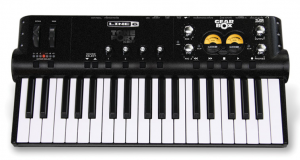
I do a lot of music and audio work on my laptop and use a Line 6 KB37 midi keyboard and digital USB audio interface. I got this years ago and its been super awesome. It come bundled with the Line 6 Pod Farm software and a bunch of other audio apps like Reason 10 and Ableton Lite and virtual instruments from Korg (the amazing Korg Legacy Collection), and Applied Acoustics (the fully versatile AAS Player and gorgeous LoungeLizard EP-4). Sadly it’s no longer made and I have no idea what I’m going to do if it ever gives up the ghost – probably go back to Linux Audio (sadly the KB37 was incompatible with my Linux audio box if you ever get the chance to play with it I recommend Musix or Ubuntu Studio but there are heaps of other options).

For either guitar or keyboard it’s fabulously versatile and can also interface with whatever Daw I’m using.

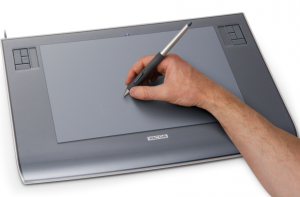
I bought a second hand Wacom drawing tablet. When I picked it up it turned out to be an old one from one of Melbourne’s larger game companies. I took that as a good sign.

I started making games in htlm5 and all I really needed for software was a copy of Sublime Text 3, Gimp and the Tiled map editor.

I moved on to Unity3d and Visual Studio 2017 but still use Gimp as my main art making software.

I tried lots of other art packages like Spriter, Krita, Pencil,  Adobe Illustrator CS2, Adobe Photoshop CS2, and GraphicsGale.  All of them were good but I like Gimp best. It seems to have all the features that I need and I’m more comfortable with the open source nature of the project.

I tried lots of other Game Engines as well: Stencyl, Unreal Engine and Amazon Lumberyard but I think I’ll stick with Unity for a while.

For model making I use Blender. I find it easier than the other programs I’ve tried (even with all the keyboard shortcuts).  The community is awesome too.

I also really like using  MagicaVoxel for quick fun models.

I tried DAZ Studio, DesignDoll and Sculptris but I always come back to Blender.

For animation in 2D I use Plastic Animation Paper (PAP4 ) and Gimp.  I really like PAP4. It’s old but has very powerful features.  I use Blender for 3D Animation.

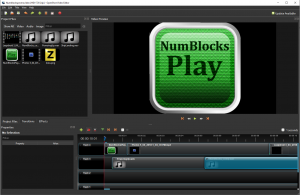
For making video content and editing I use the OpenShot Video Editor.

All my documentation is done with OpenOffice.

For Source Control I use GitHub and TortoiseSVN, or a local Helix Perforce service.

For an Android emulator I either use Android Studio, KOPLAYER or Leapdroid.  I think Leapdroid is my favourite.

I have a really really big list of software that I tried and never really used. Mostly because I just never got time and if I spent all my time getting new toys I wouldn’t have time to play with the ones I already have.


Make a Promotional Video for your Mobile Game

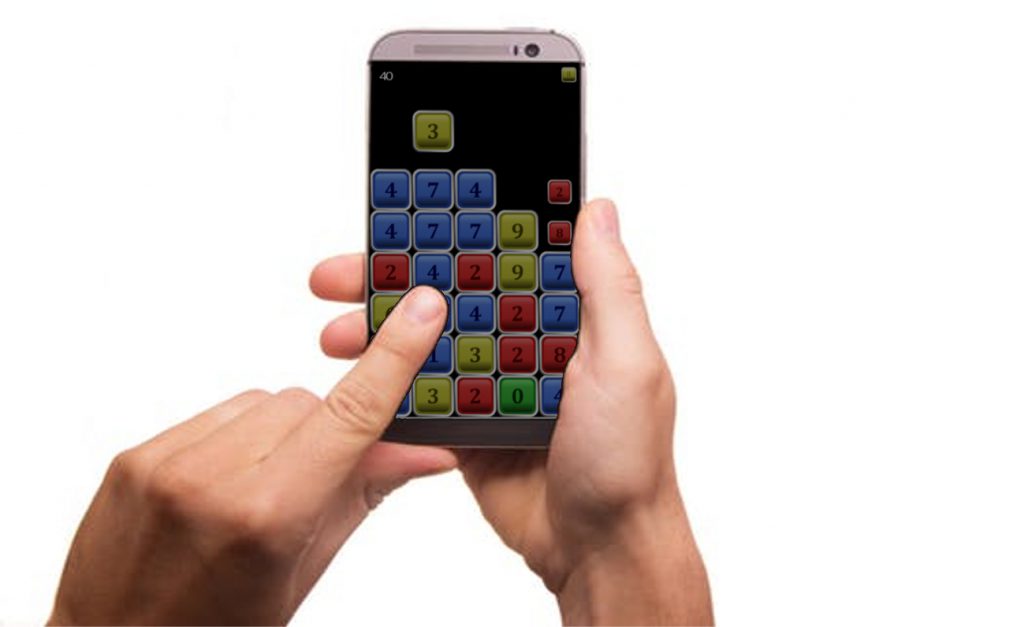
One of the best ways to get noticed on the App Store (any one) is to have a video that markets your games best assets. We recently did one for NumBlocks which has, in all honesty, been struggling to make an impact on the Play Store. The game is elegantly simple and looks great. It has a good mechanic and is easy to learn and play. We built it as a platform to test our ability to publish something and to work through the hurdles of getting a game finished. In that respect it is perfect!

Have a go of NumBlocks and let us know what you think? (click image to Play)

Not having a huge budget for marketing we wanted to make it ourselves. Were not audio visual newbies and weren’t looking for anything too complex. Plus the game is free so there is really no point paying someone to effectively polish a lump of coal in the diamond that we know it is.

Here is the finished product (click to Play!):

We used the OpenShot Video Editor.  Here at ZuluOneZero we support open source community driven projects as our default posture when looking for software to work with.  OpenShot Video Editor is crafted with love and open-source.  It’s under the free & open-source license forever (GPL version 3.0).

It’s very good and worked perfectly for our project. It has a simple but powerful interface and comes with a very nice set of built in transitions and other features.

We started off with a straight image of our NumBlocks logo. I really like the glowing internal light of this logo and the straightforward “Play” on the front. We did this icon in Gimp and imported it into the editor.

Check it out:

Next we got crafty. I asked the team (read ‘my brain’) for a flashing run through of the numbers in sequence to build tension and to lead in to the game play. We tried doing this manually in the editor but it was too fiddly lining up 40+ images with the right timing. So we came up with a novel solution and ended up opening all the number icon jpegs directly from the operating system folder onto the system picture viewer.  We then used the built in Game Bar that comes with Windows 10 to record a screen capture of the viewer. I manually scrolled through the number icons with the arrow keys on the keyboard at the tempo I wanted and sped up to a crescendo at the end.

We used the record feature of the game bar again to record the game play sequences. This time we ran the app on a mobile emulator on the desktop. The only issue I had with the final outcome of this was that the mouse pointer has to be used and looks a bit derpy. Next time I’ll download a pointy finger mouse icon to use so it looks more like a mobile game.  We edited the footage down to key sequences and game play.

Next I used the OpenShot speed manipulation tools to speed up a section of the game play footage to make it look more exciting and to showcase the game.

Next we stripped the audio from the existing clips and laid down some original music from the game.  You can listed to the music here on SoundCloud.

P.S. If you want to be notified when I post please sign up and subscribe using the form at the lower right of the page.

How To Get Beta Testers

Yay! We Are In Beta!

When ZuluOneZero published NumBlocks on the Google Play Store we went through the requisite development phases.

The game has been released now – have a play:
NumBlocks published on the Google Play Store for Android.

Click to Play:
Also on the Amazon Play Store for Android and Kindle.

Click to Play:

This was our first app that we thought looked good enough to give away to real users.
I was very proud of the artwork and how the game played on screen.
It’s a simple no-frills game but it was a perfect test platform to scope out what’s required to get a game published.
Which incidentally is a little daunting but in reality the whole process of publishing a game on the Google Play Store was pretty easy.
The Google Play Console was easy to use and there were plenty of official and community references to help us through it.

Uh Oh … Problem …

We went through several development iterations and found a revision that worked on most Android platforms.
We were running Unity 5 and targetting all mobiles above Android API 15 4.03 called “Ice Cream Sandwich”.
Not being a big shop our test devices were old personal phones that were around this API version. It was running well and looked great an a VM but once we started using our physical test devices we found a few issues dealing with different screen resolutions and one phone didn’t have enough resources to run the random number generator so that the same numbers kept spewing out.

Then we upgraded to Unity 2017.1.0f3 and lost support for those older API’s. Oops no more supported hardware to test on! We really needed to get some Beta Testers who could trial the game on a variety of different platforms that we couldn’t access. We could test thoroughly with virtual machines but as we found when testing on real phones there are some things about how the game looks and plays that can only be reproduced on the real platform.

Solved! (Not!)

So our marketing team (Harmony and Felicity) and I did some research on recruiting Beta Testers and we quickly realised that we couldn’t affort to pay for the service.
We did find a wealth of paid services out there which I’ll list below in case someone can make use of that information.

Not all of these services were paid but most of them required some sort of effort or buy-in up front that we couldn’t match.

http://appstorm.net/
http://appuseful.com/app/add
http://betacandy.com/
http://betali.st/
http://betalist.com/
http://betapage.co/
http://betatesters.io/?utm_source=InstabugBlog&content=betatestbeginnersguide
http://erlibird.com/

Ready to introduce your startup to the world?


http://makeuseof.com/
http://market.thenextweb.com/
http://momb.socio-kybernetics.net/

Contact us


http://quora.com/
http://startupli.st/
http://startuplift.com/
http://web.appstorm.net/
http://www.betabound.com/
http://www.betabound.com/announce/
http://www.mob4hire.com/

Submit Your StartUp

Submit

Submit Startup


http://younoodle.com/
https://betafamily.com/
https://feedmyapp.com/
https://inspiredbeta.com/
https://www.topcoder.com/
https://www.usertesting.com/
https://www.utest.com/

Social Media Save Me!

So we turned our attention to the online communities that might be able to assist us.
We did some more research and found that social media is literally teeming with sites and groups that want to Beta Test your app. Awesome. Problem solved.

We published a Beta version of the app on the Play Store and mocked up some Beta Testing campaign ideas along with a set of goals that we had for Beta Tests. We were looking for technical testers as opposed Marketing and I can tell you I was pretty excited about getting some feedback on the game. When we pubished the Beta version of the game we could choose a number of Beta testers that the game would be released to. The interface gave us a minimum of 1000 users so we went with that and given the number of social media sites we found thought that this didn’t sound all that unreasonable.

This is a brief list of the social media sites and lists and groups that we advertised for Beta Testers on….

Google Communities:
Android Beta Tests
https://plus.google.com/u/0/communities/109783274236354693762
Android Game Developer
https://plus.google.com/u/0/communities/107240075790372473394
Indie Game Developers
https://plus.google.com/u/0/communities/116817422244345691332
Game Developers
https://plus.google.com/u/0/communities/100673606633986699530
Game Developers
https://plus.google.com/u/0/communities/101640237427303194102
Game Programmers
https://plus.google.com/u/0/communities/102656807509358954492
Mobile Game & App Developers
https://plus.google.com/u/0/communities/107514033174068960125

http://www.reddit.com:
/r/TestMyApp
/r/alphaandbetausers
/r/AndroidAppTesters
/r/startups
/r/betatests
/r/androidapps

https://twitter.com/:
search?q=%23Betatesting%20&src=typd
search?q=%23Betatesters&src=typd
search?q=%23Testmyapp&src=typd
search?q=%23Indiedev&src=typd

We even did a big call through our Facebook Page and Blog.

Big Reveal!!!

Guess how many Beta Testers came flocking to try out our great new game…..

None. Zero. Zilch. Nada. Not one.

We checked around the boards on these sites and groups and actually found very little actual Beta Testing going on.
After a few weeks of interacting with these communities and even testing a few apps ourselves thinking that we might get some kind of Beta Testers Karma we still found that no-one really wants to test your app (unless maybe if you are building a huge free MMO that’s going to be awesome – anyone doing that?).

Free Advice!

So there you have it – Beta Testing using social media groups doesn’t work. You don’t get nufin’ for free in life.

So my advice to you is that if you don’t have one already, start building an email list now. For a startup game dev studio with no support framework it’s pretty hard to come by free help when you need it. Ideally, start collecting email addresses before you even have an app, and keep at it! Because even a handfull of Beta Testers is better than none.
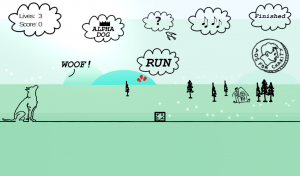

NumBlocks published on the Amazon App Store for Android and Kindle!

A fun numbers game that’s easy to learn but hard to master.

Hi,

It’s Harmony here!

We added our first game to the Amazon App Store for play on the Android and Kindle platforms.

Now you can play on even more devices!

If you can add up two numbers that make Ten …. Great …. You can Play!

It’s simple and fun.

NumBlocks Base Ten lets you stack, sort, and mash numbers together.
As long as they add up to zero (duh!) or ten.

Try different strategies to beat your high score.

Stack them, sort them, or mash them together as they fall – just get them before they hit the top!

Best of All … It’s FREE with NO ADS!

Click the image to Play!

The Five Games in Ten Weeks Challenge!

Some months back I went to a local presentation by the Unity champions at The Arcade (a collaborative workspace specifically for game developers and creatives) in Melbourne.  It was one of those “learn about others and gain insight into one’s self” moments.  One thing I picked up from one of the presenters from Hipster Whale (makers of Crossy Road) was that when they were developing a new game they tried to keep the proof of concept to a two week period.  Some time later with this in mind I presented to myself the “Five Games in Ten Weeks Challenge!” to see if I could really push out five different games in ten weeks.

Five Games in Ten Weeks

Continue reading →